The "Phantom Cost" of Unused Real Estate: Why Smart Buyers Are Choosing Functional Floor Plans in 2026
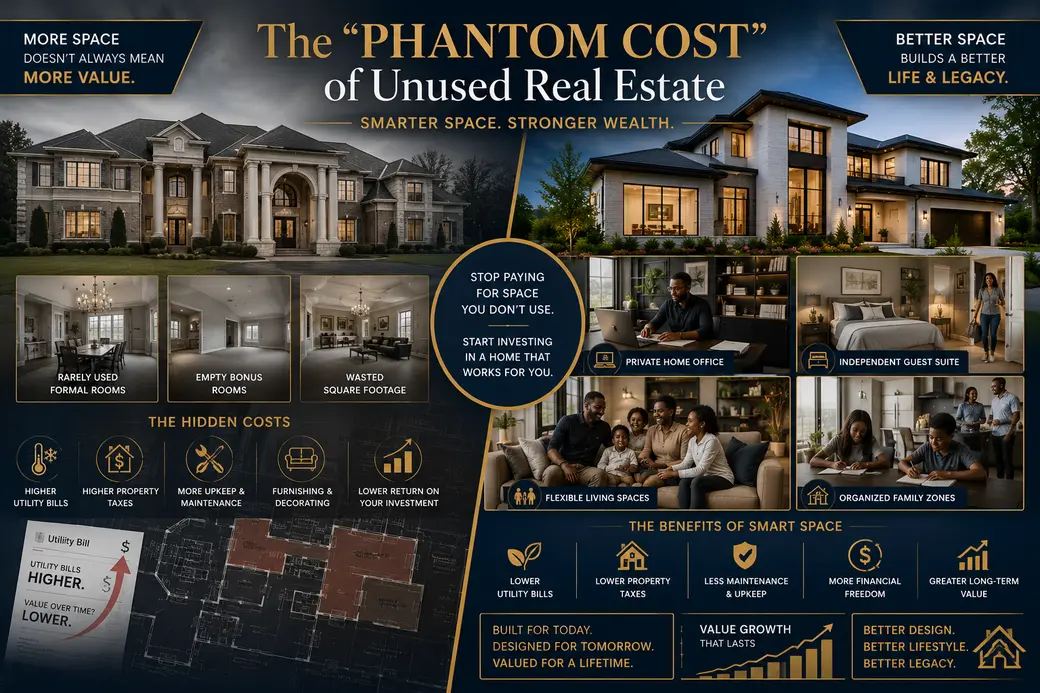
The "Phantom Cost" of Unused Real Estate
For years, buying the biggest house your budget could afford was considered the ultimate real estate goal. Grand foyers, formal dining rooms, oversized bonus rooms, and extra square footage became symbols of success.
But today's buyers are asking a much smarter question:
"Will every square foot of this home actually improve my life?"
As we move through 2026, homeowners are becoming more aware of the hidden expenses that come with oversized homes filled with rooms that rarely get used. Between rising utility costs, property taxes, maintenance, and everyday upkeep, unused square footage can quietly drain your budget without adding meaningful value.
The smartest buyers aren't looking for more space—they're looking for better space.
The Hidden Cost of "Dead Space"
Every room in your home comes with a cost, whether you use it or not.
That formal dining room you use twice a year still needs to be heated and cooled. The oversized bonus room still contributes to your electric bill, requires maintenance, and adds to the overall cost of ownership.
These are what many homeowners never consider—the phantom costs of unused real estate.
They include:
- Higher utility bills
- Increased heating and cooling expenses
- More cleaning and maintenance
- Higher property taxes
- Additional furnishing and decorating costs
- More long-term repairs and upkeep
Over time, these expenses can significantly impact your overall cost of homeownership.
Why Utility Is Replacing Size
Today's buyers are shifting their priorities.
Instead of asking, "How big is the house?" they're asking:
- Can this home adapt to my lifestyle?
- Does every room serve a purpose?
- Will this layout still work five or ten years from now?
- Can this space support my career, family, or changing needs?
Homes that answer "yes" to these questions are becoming some of the most desirable properties on the market.
The Rise of Utility Yield
Think of your home's layout as an investment.
Every square foot should provide a return—not necessarily in rental income, but in everyday functionality.
This concept is known as utility yield.
Rather than paying for rooms that remain empty, buyers are seeking spaces that can easily evolve over time.
Examples include:
Executive Home Offices
Dedicated workspaces that increase productivity without sacrificing family living areas.
Independent Guest Suites
Private accommodations for extended family or long-term guests.
Multi-Generational Living Areas
Separate spaces that allow families to live together while maintaining privacy.
Flexible Bonus Rooms
Rooms that can transition from a playroom to a home gym, media room, classroom, or hobby space as life changes.
A flexible home delivers value every day—not just when guests visit.
Georgia Summers Make Efficiency Even More Important
Georgia homeowners know that summer temperatures can put serious strain on a home's cooling system.
Larger homes with rarely used rooms often require:
- More energy to cool
- Longer HVAC run times
- Higher monthly utility bills
A thoughtfully designed floor plan helps maximize comfort while minimizing wasted energy.
Efficiency isn't just good for your wallet—it's also attractive to future buyers.
The Power of Smart Layout Design
Some homes simply work better.
Properties with separate wings, independent living areas, or clearly defined zones provide flexibility that oversized open spaces often cannot.
A well-designed layout allows homeowners to create:
- Quiet workspaces
- Private guest accommodations
- Separate entertainment areas
- Peaceful retreats
- Family gathering spaces
- Independent living quarters
These layouts support real-life needs instead of simply adding square footage.
Buy for the Life You're Building
Life changes.
Families grow.
Children return home.
Parents age.
Careers evolve.
The best homes are designed to evolve with you.
A flexible floor plan allows homeowners to adapt without needing to move every few years.
That long-term versatility has become one of the most valuable features in today's housing market.
What Buyers Should Look For
If you're searching for a home in today's market, consider features that provide long-term flexibility:
- Separate living wings
- Finished terrace levels
- Private entrances
- Home office potential
- Multi-functional bonus spaces
- Flexible floor plans
- Energy-efficient systems
These features often provide greater lifestyle value than simply purchasing a larger home.
Final Thoughts
The biggest home isn't always the smartest investment.
As buyers become more intentional about how they spend their money, functionality is replacing excess as the new standard of luxury.
Every square foot should contribute to your comfort, productivity, or long-term financial well-being.
Instead of paying for rooms that sit empty, today's homeowners are choosing homes that adapt, evolve, and deliver value every single day.
When it comes to real estate, smart design will always outperform wasted space.
Looking for a home that offers flexibility, privacy, and long-term value—not just extra square footage?
Let's find a property with a floor plan designed to fit your lifestyle today and adapt to your needs tomorrow.
FAQs
What is a functional floor plan?
A functional floor plan is designed so that every space serves a practical purpose and can adapt as your needs change.
Why are oversized homes becoming less attractive?
Many buyers are more focused on reducing maintenance costs, utility bills, and unused space while maximizing functionality.
What is utility yield in real estate?
Utility yield refers to how effectively a home's spaces contribute to your daily lifestyle, productivity, and long-term value.
Are flexible floor plans better for resale?
Homes with adaptable layouts often appeal to a wider range of buyers because they can accommodate different lifestyles and life stages.
What features add the most flexibility?
Separate living areas, home offices, finished basements or terrace levels, bonus rooms, and independent entrances are among the most sought-after features.
Categories
Recent Posts