The Death of the "Dead-Space" Floor Plan: Why Passive Income Adaptability Is Driving Home Values in 2026
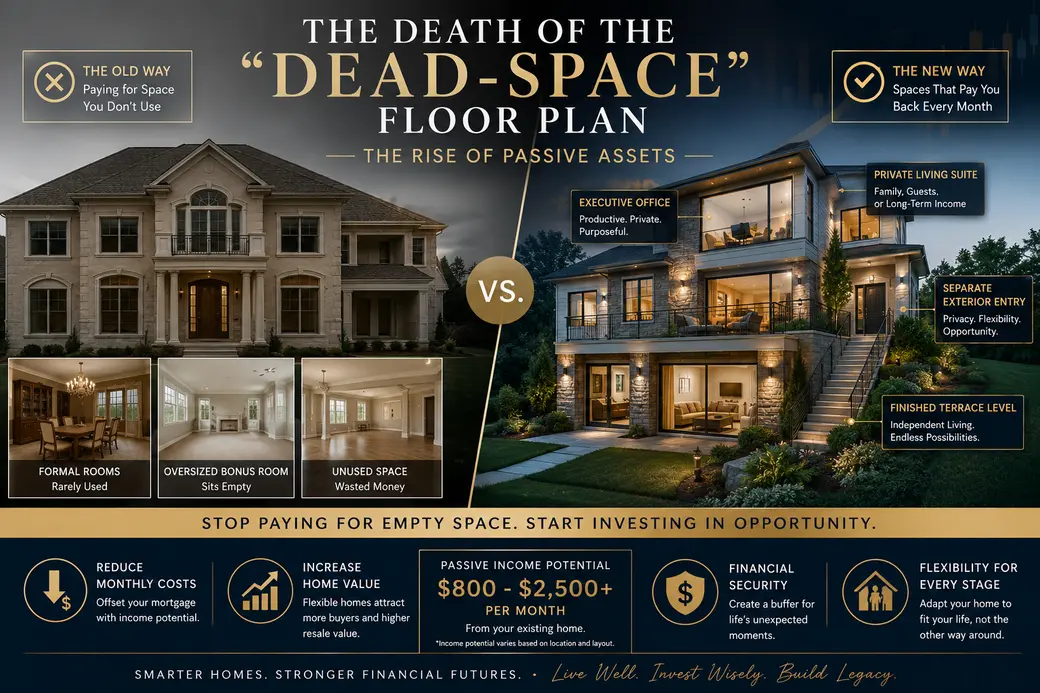
The Death of the "Dead-Space" Floor Plan
For decades, bigger was better.
Builders competed to create larger homes filled with formal dining rooms, oversized bonus spaces, and square footage that looked impressive on paper but often sat unused for most of the year.
The goal was simple:
More rooms. More space. More prestige.
But today's buyers are asking a different question.
"How can this home improve my financial future?"
In the 2026 market, buyers are becoming increasingly skeptical of paying for square footage that serves little practical purpose.
Instead, they are prioritizing homes designed around flexibility, functionality, and what many are calling Passive Income Adaptability.
The result is a major shift in what buyers value—and it is changing the way homes are evaluated across Georgia and beyond.
Why Dead Space Is Losing Value
Traditional floor plans often included rooms that sounded appealing but rarely delivered meaningful daily use.
Think about spaces such as:
- Formal dining rooms used twice a year
- Oversized bonus rooms with no defined purpose
- Sitting rooms that remain empty
- Secondary living areas that collect furniture but little activity
While these spaces may increase square footage, they don't always increase utility.
And today's buyers are becoming much more intentional about how they spend their housing dollars.
When affordability becomes a concern, every square foot must justify its existence.
The Rise of Passive Income Adaptability
The most desirable homes in today's market aren't necessarily the biggest.
They're the most adaptable.
Buyers are increasingly searching for properties that provide opportunities to:
- Reduce monthly expenses
- Support multigenerational living
- Create flexible workspace solutions
- Accommodate changing family needs
- Generate financial efficiency
Instead of seeing extra space as a luxury, buyers are viewing it as an asset.
That mindset shift is transforming demand.
The Features Buyers Are Hunting For
Certain home features have become significantly more valuable because they provide flexibility and future options.
Independent Terrace Levels
Finished terrace levels create opportunities for private living arrangements, guest accommodations, or dedicated workspaces.
Separate Exterior Entrances
Privacy is often the key ingredient that transforms additional space into truly functional living areas.
Secondary Kitchens
The ability to create independent living environments adds tremendous versatility.
Private Living Wings
Spaces that allow separation while maintaining connection are increasingly desirable among today's buyers.
Flexible Floor Plans
Homes that can evolve as life changes are outperforming rigid, traditional layouts.
The common denominator?
Options.
And options create value.
The Financial Shock Absorber Concept
One of the most interesting trends emerging in today's market is the idea of the home as a financial shock absorber.
Instead of viewing housing solely as an expense, buyers are looking for ways their home can help offset costs.
A separate living area may be used for:
Multigenerational Living
Adult children or aging parents can share housing expenses while maintaining privacy.
Long-Term Guests
Independent spaces create flexibility for extended family and visitors.
Executive Home Offices
Professionals can establish dedicated work environments without leasing external office space.
Lifestyle Flexibility
Homeowners gain the ability to adapt as family and career needs evolve.
The goal isn't always income generation.
The goal is reducing financial friction.
Why Buyers Are Thinking This Way
Several factors are driving this shift.
Housing Costs
Buyers want maximum value from every square foot they purchase.
Interest Rates
Higher borrowing costs have increased the focus on long-term utility.
Remote Work
Homeowners now need spaces that support both living and working.
Family Dynamics
Multigenerational living continues to grow throughout Georgia and across the country.
Financial Security
Flexibility creates options during changing economic conditions.
Today's buyers aren't simply purchasing homes.
They're purchasing solutions.
The New Luxury Is Functionality
Luxury used to mean excess.
Now luxury means efficiency.
A home that solves multiple problems simultaneously has become more valuable than one that simply offers more square footage.
Buyers increasingly prioritize:
- Independent living capability
- Adaptable layouts
- Privacy
- Financial flexibility
- Long-term functionality
These features are becoming some of the strongest differentiators in today's market.
How This Impacts Resale Value
One reason buyers are willing to pay a premium for adaptable homes is future demand.
The same features attracting buyers today are likely to attract buyers tomorrow.
Properties with:
- Separate entrances
- Finished terrace levels
- Secondary kitchens
- Flexible living arrangements
Appeal to a broader range of future buyers.
That flexibility often contributes to stronger long-term marketability.
Who Benefits Most?
These homes are especially attractive to:
Multigenerational Families
Seeking privacy and connection under one roof.
Remote Professionals
Needing dedicated workspace.
Relocating Buyers
Looking for adaptable floor plans.
Financially Conscious Homeowners
Interested in reducing overall housing costs.
Future-Focused Buyers
Who understand the value of flexibility.
Final Thoughts
The era of buying unused square footage for status alone is fading.
Today's buyers want homes that work harder.
They want spaces that create opportunities, solve problems, and adapt to changing lifestyles.
That's why passive income adaptability has become one of the most powerful trends shaping the 2026 housing market.
The most valuable homes aren't necessarily the largest.
They're the ones designed with purpose.
Because in today's market, flexibility isn't extra.
It's essential.
Looking for a home with independent living spaces, flexible floor plans, or house-hacking potential?
Let's identify properties that offer more than just square footage—homes that create long-term value, adaptability, and financial flexibility.
FAQs
What is passive income adaptability in real estate?
It refers to home features that create opportunities for financial flexibility, multigenerational living, or alternative uses that reduce overall housing costs.
Why are buyers moving away from traditional floor plans?
Many buyers want spaces that provide daily functionality rather than rarely used square footage.
What features are most desirable today?
Independent living areas, finished terrace levels, separate entrances, secondary kitchens, and flexible layouts.
Does a finished terrace level add value?
Many buyers view finished terrace levels as valuable because of their versatility and potential uses.
Why are adaptable homes becoming more popular?
Changing family dynamics, remote work, affordability concerns, and lifestyle flexibility are driving demand.
Categories
Recent Posts