
The Commercial Ripple Effect: How to Spot Highway 20 Growth Before Everyone Else
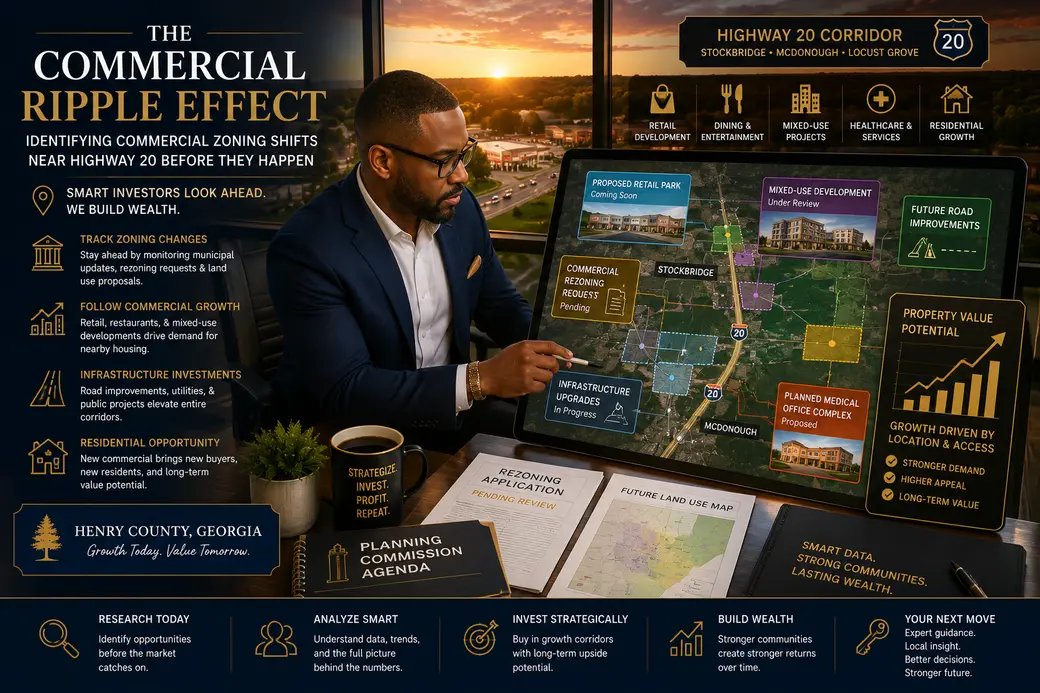
The Commercial Ripple Effect: Identifying Commercial Zoning Shifts Near Highway 20 Before They Happen
Real estate isn't just about what's happening today—it's about understanding what could shape tomorrow's market.
One of the biggest indicators of future neighborhood growth isn't found in a home's square footage or listing price. It's often hidden in planning commission agendas, zoning requests, infrastructure projects, and municipal development proposals.
Across Henry County and the Highway 20 corridor, commercial investment continues to reshape how buyers, homeowners, and investors evaluate surrounding neighborhoods. While no development guarantees future appreciation, understanding how commercial growth can influence residential demand helps buyers make more informed decisions.
If you know where to look, you can often recognize the early signs of change before construction begins.
Why Commercial Development Matters
New retail centers, restaurants, grocery stores, healthcare facilities, and mixed-use developments often improve convenience for nearby residents.
For homeowners, that can mean:
- Shorter trips for everyday errands
- Increased dining and shopping options
- Improved neighborhood amenities
- Additional employment opportunities
- Greater lifestyle convenience
For investors, commercial expansion may signal changing buyer interest in nearby residential communities.
However, commercial development is only one factor influencing local real estate markets.
Interest rates, housing inventory, school districts, infrastructure, employment, and overall economic conditions all contribute to long-term property performance.
Understanding the "Commercial Ripple Effect"
Think of new commercial development like dropping a stone into a pond.
The first wave affects the immediate area.
Over time, additional improvements may follow.
For example:
- Retail centers
- Restaurants
- Grocery stores
- Medical offices
- Fitness centers
- Coffee shops
- Professional offices
- Residential construction
These complementary developments often create lifestyle corridors that appeal to future homebuyers.
The key isn't simply watching what is being built.
It's understanding what additional investment may follow.
Why Highway 20 Continues to Attract Attention
Highway 20 remains one of Henry County's important transportation corridors, connecting residential communities with shopping, employment, schools, and regional commuter routes.
Its accessibility makes the area attractive for both residential and commercial investment.
When evaluating the corridor, buyers often consider:
- Commute convenience
- Existing retail
- Future commercial projects
- Access to major highways
- Nearby healthcare
- Schools
- Recreation
- Population growth
As these elements evolve, neighborhoods surrounding the corridor may also experience changing buyer demand.
Where Growth Usually Begins
Major commercial projects rarely appear overnight.
They often begin months—or even years—before construction starts.
Some of the earliest indicators include:
- Rezoning applications
- Comprehensive plan updates
- Planning commission meetings
- Development review agendas
- Traffic studies
- Utility expansion projects
- Road improvement proposals
- Land assemblage activity
These early steps do not guarantee a project will be completed, but they often provide valuable insight into future possibilities.
Follow the Planning Process
One of the best ways to stay informed is by following local government planning activity.
Depending on the municipality, useful public resources may include:
- Planning Commission agendas
- Zoning Board meetings
- City Council meetings
- County Commission meetings
- Comprehensive land-use plans
- Future land-use maps
- Transportation improvement plans
- Capital improvement programs
These documents often reveal proposed projects well before groundbreaking occurs.
Keep in mind that proposals can change, be delayed, or ultimately not move forward.
Commercial Growth Doesn't Always Mean Higher Home Values
A common misconception is that every new shopping center automatically increases nearby home values.
Real estate is rarely that simple.
Positive influences may include:
- Greater convenience
- Expanded services
- Increased employment
- Enhanced lifestyle amenities
Potential concerns may include:
- Increased traffic
- Noise
- Higher congestion
- Changing neighborhood character
- Additional infrastructure demands
Every development should be evaluated individually.
Some neighborhoods benefit significantly from nearby commercial investment, while others may experience trade-offs depending on the project's location and scale.
Investors Watch Infrastructure Too
Commercial projects often coincide with infrastructure improvements.
These may include:
- Road widening
- New traffic signals
- Sidewalk construction
- Utility expansion
- Streetscape improvements
- Public parks
- Trail systems
Improved infrastructure can make nearby neighborhoods more attractive to future buyers.
However, infrastructure projects may take years to complete and should never be viewed as guarantees of future market performance.
Questions Smart Buyers Ask
Before purchasing near a developing commercial corridor, consider asking:
- What projects have already been approved?
- Which developments are still proposals?
- What zoning currently exists?
- Are road improvements planned?
- How could traffic patterns change?
- Will additional retail improve daily convenience?
- Are there environmental considerations?
- What long-term vision does the municipality have for this area?
Understanding these factors provides a more complete picture than simply looking at current listings.
Looking Beyond the Headlines
News about major commercial announcements often generates excitement.
But successful real estate decisions require looking beyond headlines.
Evaluate:
- Current market conditions
- Comparable home sales
- Existing neighborhood demand
- Infrastructure readiness
- Long-term planning documents
- Population trends
- Employment growth
- Housing supply
Commercial growth becomes most meaningful when viewed alongside the broader market.
Final Thoughts
Commercial development has the power to reshape communities over time, creating new opportunities for homeowners, buyers, and investors alike.
Along the Highway 20 corridor, continued investment in retail, infrastructure, and community amenities has contributed to evolving neighborhood appeal throughout Henry County.
While no zoning request or commercial project guarantees future appreciation, staying informed about local planning activity can help you make more strategic real estate decisions.
The buyers who understand where communities are headed—not just where they are today—are often better positioned to identify opportunities that align with their long-term goals.
Thinking about buying, selling, or investing near Highway 20 or another growing area in Henry County?
I can help you understand current market trends, evaluate neighborhood growth patterns, and identify communities that align with your lifestyle or investment strategy—using verified local data, not speculation.
Let's build a real estate strategy that's focused on informed decisions and long-term success.
Frequently Asked Questions
Does commercial development increase home values?
Not necessarily. Commercial development may improve neighborhood appeal and convenience, but home values are influenced by many factors, including market conditions, housing inventory, location, and buyer demand.
How can I track future commercial development?
Many municipalities publish Planning Commission agendas, zoning applications, future land-use maps, and public meeting schedules that provide insight into proposed projects.
Are zoning requests guaranteed to be approved?
No. Rezoning applications are reviewed through a public process and may be approved, modified, delayed, or denied.
Should investors monitor municipal planning meetings?
Yes. Public planning documents can provide valuable information about proposed infrastructure improvements and future development activity, although plans can change over time.
Is buying near Highway 20 a good investment?
Every property should be evaluated individually based on location, market conditions, comparable sales, long-term goals, and verified development information.
Categories
Recent Posts