
The Consolidated Equity Playbook: How Georgia Families Are Building Generational Wealth Together
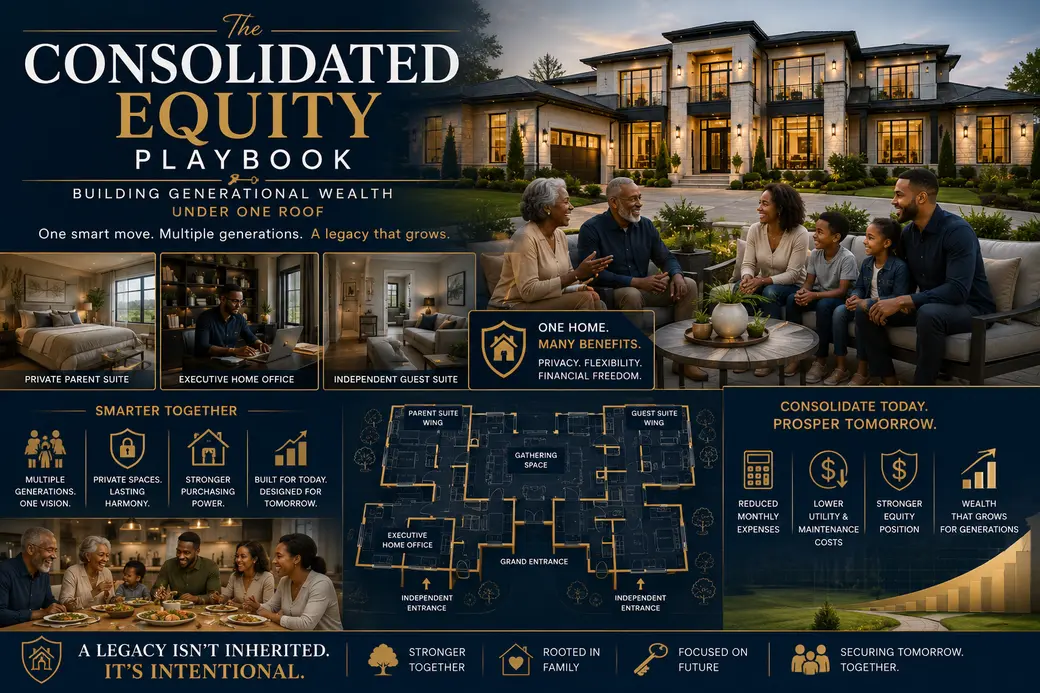
The Consolidated Equity Playbook
For decades, success in real estate meant each generation owning its own home. Parents had a mortgage, adult children eventually purchased a home of their own, and grandparents often maintained a separate residence.
Today, many families are taking a fresh look at that model.
With rising housing expenses, insurance premiums, utility costs, and ongoing maintenance, maintaining multiple properties can place a significant financial burden on a family. Instead of spreading their resources across several homes, more families are asking a different question:
What if we combined our buying power into one exceptional property designed to meet everyone's needs?
That's the idea behind what many are calling the Consolidated Equity Playbook—a strategy centered on maximizing purchasing power, reducing duplicate housing expenses, and creating a home that supports multiple generations without sacrificing privacy.
Why Families Are Rethinking Traditional Homeownership
Owning multiple homes often means paying for many of the same recurring expenses several times over.
These can include:
- Multiple mortgage payments
- Utility bills
- Homeowners insurance policies
- HOA dues
- Lawn care and maintenance
- Property taxes
- Repairs and upkeep
While separate homes offer independence, they can also reduce the amount of capital available for other long-term financial goals.
Many families are discovering that combining resources can create opportunities that simply weren't possible before.
What Is the Consolidated Equity Playbook?
The Consolidated Equity Playbook is a strategy where family members combine their financial resources to purchase one larger, thoughtfully designed home that accommodates multiple generations.
Instead of maintaining several smaller properties, families invest in a home that offers:
- Greater flexibility
- Better functionality
- More living space where it matters
- Long-term adaptability
- Stronger purchasing power
The objective isn't simply living together—it's making smarter use of shared financial resources while maintaining each household's independence.
The Secret Is Structural Zoning
The success of multi-generational living often comes down to one key design feature:
Privacy.
The most desirable homes aren't simply larger—they're intentionally designed with separate living areas that allow multiple generations to enjoy independence under one roof.
Features that make these homes stand out include:
Separate Living Wings
Clearly defined areas that provide personal space for each household.
Private Bedroom Suites
Comfort and privacy for every generation.
Independent Entrances
Allowing family members to come and go with greater flexibility.
Multiple Living Areas
Reducing crowding and supporting different daily routines.
Executive Home Office Space
Dedicated work areas that don't interfere with family life.
When a home is designed with these features, it supports connection without compromising personal space.
Building Wealth Through Smarter Real Estate Decisions
Consolidating equity isn't just about reducing expenses—it's about increasing opportunity.
By combining financial resources, families may be able to purchase a home with features that would have been out of reach individually.
Potential advantages include:
- Access to higher-quality homes
- More desirable neighborhoods
- Flexible floor plans
- Greater long-term resale appeal
- Enhanced lifestyle opportunities
A thoughtfully chosen property can continue serving a family's needs as children grow, parents age, and careers evolve.
The New Definition of Luxury
Luxury today isn't measured solely by square footage or elaborate formal spaces.
Modern buyers increasingly define luxury by:
- Flexibility
- Privacy
- Functionality
- Financial efficiency
- Homes that adapt to changing lifestyles
A well-designed multi-generational home provides all of these benefits while supporting long-term family goals.
Who Benefits Most?
This strategy can be especially valuable for:
Families Caring for Aging Parents
Keeping loved ones close while preserving independence.
Adult Children Returning Home
Providing space to save for future goals.
Remote Professionals
Creating dedicated workspaces within the home.
Families Focused on Long-Term Wealth
Reducing duplicate expenses and maximizing buying power.
Buyers Planning for the Future
Choosing a home that can evolve as life changes.
What to Look for in a Multi-Generational Home
Not every large home is designed for multiple households.
The most successful layouts typically include:
- Separate living quarters
- Finished terrace levels or basements
- Independent entrances
- Flexible bonus rooms
- Secondary living spaces
- Private home offices
- Functional gathering areas
These features provide the versatility today's buyers increasingly demand.
Final Thoughts
The way families think about homeownership is evolving.
Rather than measuring success by the number of properties owned, many are focusing on how effectively those properties support their financial goals and daily lives.
The Consolidated Equity Playbook isn't about giving up independence. It's about investing more intentionally, reducing unnecessary housing expenses, and choosing a home that creates lasting value for every generation.
When thoughtfully designed, a multi-generational home becomes more than a place to live—it becomes a foundation for stronger family connections, greater financial flexibility, and a legacy that can benefit generations to come.
If you're exploring multi-generational living or looking for a home that offers privacy, flexibility, and long-term value, I'd love to help you find the right property.
Let's discuss how the right floor plan can support your family's goals today and well into the future.
FAQs
What is consolidated equity in real estate?
Consolidated equity is a strategy where family members combine financial resources to purchase a shared home that better meets their collective needs while reducing duplicate housing expenses.
Why are multi-generational homes becoming more popular?
Rising housing costs, caregiving needs, changing family dynamics, and the desire for greater financial efficiency are encouraging more families to consider shared living arrangements.
What features make a home ideal for multiple generations?
Separate living quarters, independent entrances, multiple living areas, flexible floor plans, and private workspaces are among the most desirable features.
Can multi-generational living help reduce expenses?
Sharing one well-designed home can reduce duplicate costs such as utilities, maintenance, insurance, and other ongoing housing-related expenses.
Is privacy important in a multi-generational home?
Absolutely. Homes designed with distinct living zones and private spaces tend to support more comfortable long-term living arrangements.
Categories
Recent Posts