The Multi-Family Consolidation Wealth Strategy: Why More Georgia Families Are Combining Households
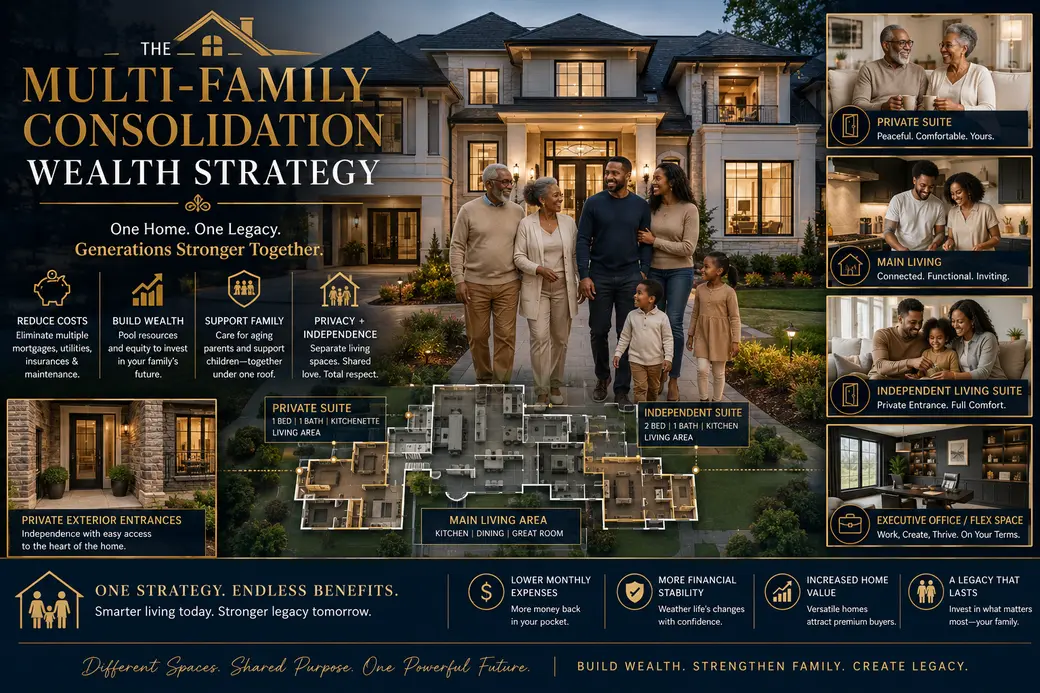
The Multi-Family Consolidation Wealth Strategy
For decades, the American dream followed a familiar formula.
Parents owned one home.
Adult children eventually purchased another.
Grandparents maintained a separate residence.
Three generations.
Three mortgages.
Three utility bills.
Three property tax obligations.
Three maintenance budgets.
But in today's economy, families across Georgia are beginning to ask a different question:
Why maintain multiple households when one well-designed property can accomplish the same goal more efficiently?
A growing number of families are embracing what many financial planners and real estate professionals now recognize as one of the most practical wealth-building trends in modern housing:
Strategic Household Consolidation.
The End of the Three-Household Model
Modern living expenses have fundamentally changed how families think about housing.
Rising costs have caused many households to reevaluate traditional living arrangements.
Families are looking at:
- Multiple mortgage payments
- Escalating utility costs
- Home maintenance expenses
- Insurance premiums
- Property taxes
- Caregiving responsibilities
And they're realizing something important.
The largest expense category for many families isn't food, transportation, or healthcare.
It's housing.
Reducing duplicate housing expenses often creates one of the fastest paths toward greater financial flexibility.
What Is Strategic Household Consolidation?
Strategic Household Consolidation is the process of combining family resources into one thoughtfully designed property.
Instead of maintaining separate homes across generations, families pool equity and financial resources to purchase a single residence capable of serving multiple households.
The objective isn't simply living together.
The objective is improving financial efficiency while preserving independence.
Done correctly, it can dramatically reduce:
- Monthly expenses
- Duplicate utility costs
- Insurance obligations
- Maintenance responsibilities
- Housing-related stress
At the same time, families often gain access to a larger, more functional property.
Why This Trend Is Exploding Across Georgia
Several economic and demographic shifts are fueling this movement.
Rising Housing Costs
Many families are looking for smarter ways to maximize purchasing power.
Aging Parents
Families increasingly want loved ones nearby without sacrificing privacy.
Adult Children Returning Home
Young adults are choosing to save aggressively before purchasing homes of their own.
Caregiving Needs
Having family members under one roof often simplifies daily support and caregiving.
Wealth Preservation
Combining resources allows families to leverage equity more efficiently.
The result is a growing demand for homes that support multiple generations.
The Secret to Making It Work: Privacy
Here's where many families make mistakes.
Simply buying a larger house isn't enough.
The most successful multi-generational living arrangements are built around one principle:
Independence
Families want connection.
They do not want constant interruption.
The most desirable properties today feature:
- Separate living wings
- Independent entrances
- Multiple living rooms
- Private bedroom suites
- Flexible gathering spaces
- Dedicated work areas
These features create what buyers truly want:
Togetherness without sacrificing autonomy.
The Financial Benefits Are Significant
When families consolidate intelligently, the financial impact can be substantial.
Fewer Housing Expenses
Multiple housing payments become one.
Lower Utility Costs
One property often costs less to operate than multiple separate residences.
Reduced Maintenance
Instead of maintaining several homes, resources can be focused on one property.
Better Purchasing Power
Combined equity often unlocks higher-quality housing options.
Long-Term Wealth Building
Families can redirect savings toward investments, retirement planning, education, and other financial goals.
The strategy isn't just about saving money.
It's about reallocating resources more effectively.
The New Definition of Luxury
Luxury is evolving.
It is no longer defined solely by:
- Square footage
- Formal dining rooms
- Oversized foyers
- Unused bonus rooms
Today's luxury buyers increasingly prioritize:
Flexibility
Privacy
Functionality
Family Support
Financial Efficiency
A home that serves multiple generations while maintaining independence has become one of the most valuable assets in today's market.
What Features Buyers Should Look For
Not every home is designed for successful multi-generational living.
The best properties typically offer:
Separate Living Quarters
Allowing multiple generations to coexist comfortably.
Independent Entrances
Creating privacy and autonomy.
Multiple Living Spaces
Reducing daily friction.
Flexible Floor Plans
Adapting as family needs change.
Executive Home Offices
Supporting remote work and business ownership.
Terrace Levels or Finished Basements
Creating opportunities for independent living arrangements.
These features significantly increase a home's versatility and long-term value.
Why Buyers Are Paying a Premium
The market is increasingly rewarding homes that solve real-life problems.
Properties designed for multi-generational living appeal to:
- Growing families
- Aging parents
- Adult children
- Remote professionals
- Caregivers
- Relocation buyers
That broad appeal often creates stronger buyer demand and increased marketability.
Functionality has become one of the most valuable currencies in real estate.
The Future of Family Wealth
Many families spend years building equity in separate homes.
Strategic household consolidation creates an opportunity to leverage that equity collectively.
Instead of maintaining multiple expensive properties, families can focus their resources on:
- Building long-term wealth
- Reducing financial strain
- Supporting loved ones
- Creating lifestyle flexibility
- Preserving family assets
For many households, this isn't simply a housing decision.
It's a wealth strategy.
Final Thoughts
The future of homeownership isn't necessarily about owning more houses.
For many Georgia families, it's about owning the right house.
A property designed for true multi-generational harmony can reduce expenses, simplify life, strengthen family support systems, and create opportunities for long-term wealth building.
As housing costs continue evolving, strategic household consolidation is quickly becoming one of the smartest real estate moves modern families can make.
The key isn't living closer together.
The key is finding a home designed to make it work.
Thinking about combining households, caring for aging parents, supporting adult children, or creating a more efficient family wealth strategy?
Let's explore homes designed for modern multi-generational living that provide privacy, flexibility, and long-term value.
FAQs
What is strategic household consolidation?
It is the process of combining multiple households into one property to reduce expenses and improve financial efficiency.
Why is multi-generational living becoming more popular?
Rising housing costs, caregiving needs, and financial planning considerations are driving demand.
What features make a home ideal for multiple generations?
Separate entrances, independent living spaces, flexible layouts, and private living quarters.
Can multi-generational living help build wealth?
Many families use shared housing arrangements to reduce expenses and preserve financial resources.
Is privacy important in multi-generational homes?
Absolutely. Homes with independent living areas tend to create more successful long-term living arrangements.
Categories
Recent Posts