
The Death of the Cookie-Cutter Home: What Buyers Really Want in Today's Market
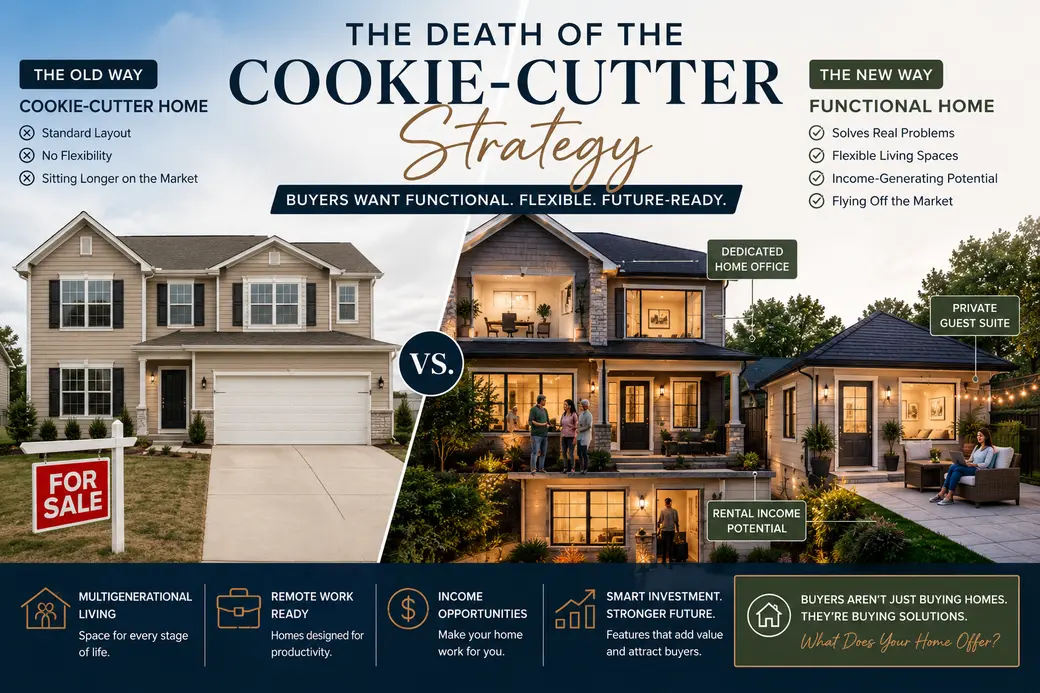
The Death of the "Cookie-Cutter" Home: What Buyers Really Want Today
For years, buyers were primarily focused on square footage, granite countertops, and open floor plans. If a home checked the standard boxes, it typically attracted plenty of attention.
Today's market looks very different.
As inventory levels normalize and buyers become more selective, many traditional "cookie-cutter" homes are spending longer on the market. Meanwhile, properties that solve real-world lifestyle and financial challenges are attracting significant interest and often selling more quickly.
The shift isn't just about aesthetics anymore. Buyers are actively searching for homes that offer flexibility, functionality, and opportunities to improve their quality of life.
In many cases, the homes generating the most attention aren't necessarily the newest or largest—they're the ones that provide solutions.
Why Buyers Are Thinking Differently
Economic uncertainty, higher housing costs, remote work, and multigenerational living trends have changed how buyers evaluate real estate.
Instead of asking:
"What looks the nicest?"
Many buyers are now asking:
"What makes my life easier?"
This shift has created growing demand for homes that offer flexibility and long-term value.
Features that once seemed like bonuses are becoming major selling points.
The Rise of Functional Real Estate
Functional real estate refers to properties that serve multiple purposes beyond simply providing a place to live.
Today's buyers increasingly value homes that can adapt to changing needs over time.
Popular examples include:
- Separate guest suites
- Basement apartments
- In-law suites
- Detached living spaces
- Dual primary suites
- Dedicated home offices
- Finished bonus rooms
- Homes with rental income opportunities
- Properties with space for home businesses
These features provide flexibility that many buyers now consider essential.
Income Potential Is Driving Demand
One of the strongest trends in today's market is the growing interest in income-producing opportunities.
As affordability challenges continue, buyers are looking for creative ways to offset ownership costs.
Properties that offer:
- Basement rental potential
- Accessory dwelling units (ADUs)
- Separate entrances
- Guest houses
- Multi-unit configurations
often generate increased buyer interest because they provide opportunities for supplemental income.
For many buyers, a property is no longer viewed solely as a home—it's also a financial asset.
Multigenerational Living Is Reshaping Home Searches
Families are increasingly living together for longer periods.
Adult children may move back home temporarily. Aging parents may require care. Some families simply prefer the financial advantages of shared living arrangements.
As a result, homes with independent living spaces are becoming highly desirable.
Buyers frequently prioritize:
Private Living Areas
Separate bedrooms, bathrooms, and entrances create privacy while allowing families to remain connected.
Flexible Floor Plans
Spaces that can evolve from guest suites to offices or caregiving accommodations provide long-term value.
Multiple Gathering Spaces
Families appreciate layouts that allow both shared experiences and personal privacy.
Remote Work Changed Everything
The work-from-home movement permanently altered buyer expectations.
A spare bedroom is no longer always enough.
Many buyers now want:
- Dedicated home offices
- Quiet workspaces
- Flexible bonus rooms
- Strong internet infrastructure
- Multi-purpose living areas
Homes that accommodate hybrid or remote work often stand out in competitive markets.
Why Some Standard Homes Are Taking Longer to Sell
This doesn't mean traditional homes are undesirable.
However, when buyers compare two similar properties, the one offering additional functionality often wins.
Consider two comparable homes:
Home A:
- Standard layout
- Four bedrooms
- No flexible space
Home B:
- Four bedrooms
- Dedicated office
- Separate guest suite
- Potential rental area
Even if pricing is similar, Home B often creates more perceived value because it solves more problems.
Function is becoming a major differentiator.
What Sellers Should Learn From This Trend
If you're planning to sell, understanding buyer priorities can help you position your property more effectively.
Instead of marketing features alone, focus on highlighting solutions.
For example:
Instead of:
"Finished basement"
Try:
"Flexible lower level ideal for multigenerational living, guest accommodations, or a private home office."
Instead of:
"Bonus room"
Try:
"Dedicated workspace, fitness room, or potential media room."
Today's buyers are purchasing possibilities as much as they are purchasing square footage.
The Future of Home Design
As buyer preferences continue evolving, flexibility is likely to remain one of the most valuable features in residential real estate.
Homes that can adapt to changing family dynamics, economic conditions, and lifestyle needs will continue to attract strong interest.
The era of one-size-fits-all housing is fading.
In its place, buyers are embracing homes that work harder, provide more options, and create opportunities beyond traditional living arrangements.
Final Thoughts
The death of the cookie-cutter home isn't about style—it's about function.
In today's market, buyers are actively seeking properties that offer flexibility, independence, and financial advantages. Homes with dedicated workspaces, multigenerational living options, and income-generating potential are often outperforming standard layouts because they solve real-life challenges.
Whether you're buying, selling, or investing, understanding this shift can help you make smarter real estate decisions and identify the features that truly drive demand.
Curious about which features buyers are prioritizing in your local market?
Whether you're preparing to sell, searching for a home with flexible living space, or exploring investment opportunities, let's discuss what today's buyers are really looking for and how to position your property for success.
FAQs
What is a cookie-cutter home?
A cookie-cutter home typically refers to a property with a standard floor plan and features that closely resemble other homes in the neighborhood.
What makes a home functional?
Functional homes offer flexible spaces that can adapt to changing needs, such as home offices, guest suites, rental opportunities, or multigenerational living areas.
Are homes with rental potential more valuable?
In many markets, homes with income-producing opportunities attract additional buyer interest because they provide financial flexibility.
Why are multigenerational homes becoming popular?
Rising housing costs, caregiving needs, and lifestyle preferences have increased demand for homes that accommodate multiple generations under one roof.
What features help homes sell faster today?
Dedicated workspaces, flexible layouts, private living areas, outdoor living spaces, and income-generating opportunities are among the features many buyers prioritize.
Categories
Recent Posts