The Financial Buffer: Why House Hacking Is Becoming One of Real Estate's Smartest Wealth-Building Strategies
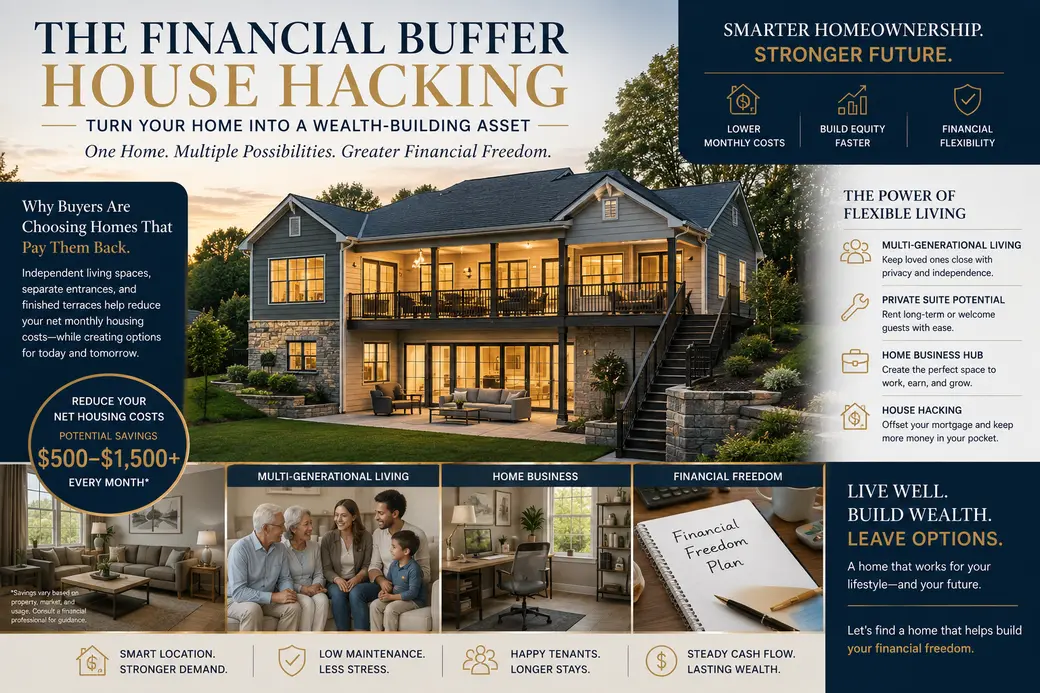
The Financial Buffer: Why House Hacking Is Changing the Way Buyers Think About Homeownership
For decades, most buyers viewed a home as a place to live.
Today, many buyers are beginning to see it as something more.
With rising housing costs, increasing insurance premiums, utility expenses, and everyday living costs, homeowners are looking for ways to make their housing dollars work harder.
The question isn't simply:
"Can I afford this home?"
It's becoming:
"Can this home help improve my financial situation?"
That's where house hacking enters the conversation.
Properties with finished terrace levels, separate entrances, guest suites, or independent living areas are no longer viewed as luxury features. They're becoming valuable financial tools that help homeowners create flexibility, reduce expenses, and build long-term wealth.
What Is House Hacking?
House hacking is the practice of using part of your home to help offset housing expenses.
Unlike traditional investment properties, house hacking allows homeowners to live in the property while benefiting from additional functionality and financial advantages.
This can include:
- Independent living suites
- Finished terrace levels
- Private guest quarters
- Separate entrances
- Flexible living areas
- Home business spaces
The goal isn't necessarily generating massive income.
The goal is creating a financial buffer that reduces the overall cost of homeownership.
Why Buyers Are Thinking Differently
Today's buyers face challenges previous generations rarely encountered.
They are navigating:
- Higher housing costs
- Increased insurance expenses
- Rising utility bills
- Inflationary pressures
- Elevated interest rates
As a result, buyers are becoming more strategic.
Rather than focusing solely on finishes and aesthetics, they're evaluating how a home's layout can support their long-term financial goals.
Flexible floor plans are becoming increasingly valuable because they create options.
And options create opportunity.
The Rise of Independent Living Spaces
One of the most sought-after features in today's market is independent living capability.
Homes with separate living areas can support:
Aging Parents
Families often want loved ones nearby without sacrificing privacy.
Adult Children
Many young adults are choosing to stay home longer while saving for future goals.
Long-Term Guests
Independent spaces provide flexibility for visiting family and friends.
Shared Living Arrangements
Households can create cost-sharing opportunities while maintaining comfort and independence.
The common theme is simple:
A well-designed home can support multiple needs simultaneously.
Your Home Business Could Become a Financial Asset
House hacking isn't limited to living arrangements.
Many homeowners are utilizing independent spaces as dedicated business environments.
Separate areas can serve as:
- Professional offices
- Consulting studios
- Creative workspaces
- Client meeting rooms
- Wellness practices
- Online business headquarters
Instead of leasing commercial space, homeowners may be able to leverage existing square footage to support income-producing activities.
This creates another layer of financial efficiency.
The Financial Hedge Buyers Are Looking For
One of the biggest reasons buyers are gravitating toward flexible homes is risk reduction.
Life changes.
Careers evolve.
Family situations shift.
Expenses increase.
Homes with independent living capabilities provide a built-in hedge against uncertainty.
They offer:
Flexibility
The ability to adapt as needs change.
Cost Sharing
Potential opportunities to reduce household expenses.
Increased Utility
More ways to use the property productively.
Future Resale Appeal
Growing demand from buyers seeking similar solutions.
In today's market, flexibility has become a valuable asset.
The Death of the Single-Purpose Home
Traditional floor plans were designed for a simpler era.
Modern buyers need more.
They want homes that can function as:
- A residence
- A workplace
- A guest retreat
- A family support system
- A financial tool
Properties that serve multiple purposes are increasingly outperforming homes designed for only one.
That's why functional floor plans continue attracting significant buyer attention.
Building Wealth Through Smart Homeownership
Many buyers assume wealth building starts with investment properties.
But for many households, it begins with their primary residence.
A home that helps reduce expenses can improve cash flow.
Improved cash flow can increase savings.
Savings can create future investment opportunities.
The strategy isn't complicated.
It's about purchasing a property that works harder for you.
Instead of viewing housing solely as an expense, buyers are beginning to view flexible homes as wealth-building tools.
What Buyers Should Look For
If you're searching for a home with financial flexibility, prioritize features such as:
Finished Terrace Levels
Additional living space with multiple potential uses.
Separate Entrances
Privacy and independence for different occupants.
Independent Living Suites
Ideal for multigenerational living or guest accommodations.
Flexible Layouts
Spaces that can evolve over time.
Dedicated Office Areas
Support for remote work or business operations.
The more adaptable the floor plan, the more opportunities it may create.
Final Thoughts
The concept of homeownership is evolving.
Today's buyers aren't simply looking for square footage.
They're looking for flexibility.
They're looking for solutions.
They're looking for financial security.
Homes with finished terrace levels, separate entrances, independent living suites, and adaptable layouts provide something increasingly valuable in today's economy: options.
And in uncertain markets, options often become one of the strongest financial buffers a homeowner can have.
Looking for a home that offers more than just a place to live?
Let's explore properties with flexible layouts, independent living spaces, and house hacking potential that can help support your financial goals while creating long-term value.
FAQs
What is house hacking?
House hacking is using part of your home to help offset housing expenses through flexible living arrangements or income-producing opportunities.
Do I need an investment property to house hack?
No. Many homeowners utilize their primary residence to create financial flexibility.
What features make a home good for house hacking?
Finished terrace levels, separate entrances, guest suites, independent living areas, and flexible floor plans.
Why are multigenerational homes becoming more popular?
Many families are seeking affordable housing solutions, caregiving options, and shared living arrangements.
Can a home office contribute to house hacking?
Yes. Dedicated workspaces can support businesses and reduce the need for external office leases.
Categories
Recent Posts