Consolidating the Family Matrix: Why Multi-Generational Living Is Booming in Georgia
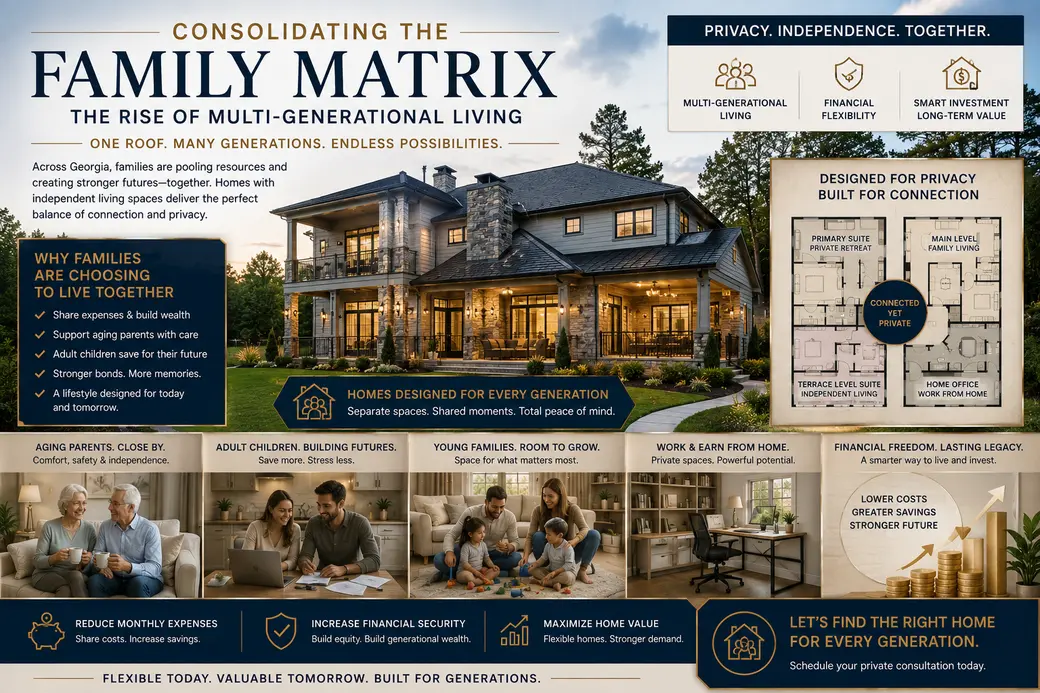
Consolidating the Family Matrix: Why Multi-Generational Living Is Reshaping Georgia Real Estate
The traditional American household is evolving.
For decades, homeownership followed a predictable path. Children grew up, moved out, bought homes of their own, and aging parents remained in separate residences.
Today, that model is changing.
Across Georgia, more families are choosing to pool resources, combine households, and create living arrangements that support multiple generations under one roof.
Adult children are moving back home to save for future goals.
Parents are welcoming aging family members closer for comfort and care.
Families are looking for smarter ways to navigate rising housing costs while strengthening family connections.
The result?
Multi-generational living has become one of the fastest-growing segments in Georgia real estate.
But there's one factor separating successful multi-generational homes from stressful ones:
Privacy.
The Rise of Multi-Generational Living
Families are making housing decisions differently than they did even a decade ago.
Several factors are driving this shift:
Housing Affordability
Rising home prices and mortgage costs have encouraged families to explore shared living arrangements.
Aging Parents
Many families want to keep loved ones close while providing support and maintaining independence.
Adult Children Returning Home
Young adults are increasingly choosing to live at home longer while saving for down payments, education expenses, or future investments.
Family Support Systems
Shared living often creates stronger caregiving, childcare, and financial support networks.
For many households, multi-generational living simply makes practical sense.
Why Privacy Has Become the Most Valuable Feature
The idea of living together appeals to many families.
The challenge is making it work long-term.
The biggest concern isn't space.
It's privacy.
Families want connection without sacrificing independence.
That's why today's buyers are actively searching for homes that offer:
- Separate living areas
- Independent entrances
- Private bedrooms and bathrooms
- Dedicated gathering spaces
- Flexible floor plans
- Distinct living zones
The most successful multi-generational homes allow families to live together without feeling like they're living on top of each other.
The New Premium in Real Estate
Not long ago, buyers prioritized features such as granite countertops or oversized bonus rooms.
Today, many buyers are placing greater value on functionality.
Homes with independent living capabilities are attracting significant attention because they solve real-life challenges.
These layouts provide opportunities for:
Aging Parents
Comfortable living arrangements that preserve dignity and independence.
Adult Children
A pathway to save money while preparing for future homeownership.
Extended Family Members
Flexible accommodations without disrupting daily routines.
Long-Term Guests
Private spaces that allow visitors to feel at home.
Functionality has become one of the most valuable currencies in today's housing market.
What Makes a Great Multi-Generational Home?
Not every large home is a good multi-generational home.
The difference lies in the layout.
Buyers should look for features such as:
Separate Living Areas
Spaces designed to function independently when needed.
Private Entrances
Creating a greater sense of autonomy and convenience.
Multiple Living Rooms
Allowing family members to spread out comfortably.
Flexible Bonus Spaces
Areas that can adapt to changing needs over time.
Dedicated Workspaces
Supporting remote work and home-based businesses.
The goal is creating flexibility without sacrificing family connection.
Financial Benefits Beyond Shared Housing
Many families initially consider multi-generational living for emotional reasons.
However, the financial advantages can be significant.
Potential benefits include:
Shared Household Expenses
Combining resources can reduce overall living costs.
Increased Savings Opportunities
Adult children may accelerate future financial goals.
Reduced Caregiving Costs
Families can provide support while remaining close.
Long-Term Wealth Building
Pooling resources may create opportunities for stronger financial planning.
For many households, multi-generational living becomes both a lifestyle choice and a financial strategy.
How Builders and Buyers Are Adapting
The growing demand for flexible living arrangements is influencing home design throughout Georgia.
Buyers increasingly prioritize:
- Finished terrace levels
- In-law suites
- Separate entrances
- Dual primary suites
- Private guest quarters
- Independent living spaces
Homes designed with adaptability in mind often attract broader buyer interest because they can evolve alongside changing family needs.
Why This Trend Is Here to Stay
Many real estate trends come and go.
Multi-generational living appears different.
The forces driving demand aren't temporary.
They include:
- Demographic changes
- Rising housing costs
- Longer life expectancies
- Remote work flexibility
- Family-centered lifestyles
These factors suggest demand for flexible housing solutions may continue growing for years to come.
As a result, homes designed for multi-generational living are becoming some of the most desirable properties in today's market.
The Future of Homeownership Is Flexibility
The most valuable homes of tomorrow may not be the largest.
They may be the most adaptable.
Families want homes that can evolve as life changes.
They want properties that support:
- Growing families
- Aging parents
- Adult children
- Remote work
- Caregiving responsibilities
- Financial efficiency
Homes with distinct, independent living zones provide exactly that.
In today's market, flexibility isn't a luxury.
It's a necessity.
Final Thoughts
Multi-generational living is no longer a niche housing trend.
It's becoming a mainstream solution for families seeking affordability, support, flexibility, and long-term financial security.
As demand continues to grow throughout Georgia, homes that offer true privacy, independent living spaces, and adaptable floor plans are commanding increased attention from buyers.
The future of housing isn't about fitting everyone into the same space.
It's about creating homes where families can live together while still enjoying the independence they value most.
Looking for a home designed for today's modern family?
Let's explore properties that offer the privacy, flexibility, and independent living spaces needed to support multigenerational living while protecting long-term value.
FAQs
What is multi-generational living?
Multi-generational living involves multiple generations of a family sharing one home while maintaining functional independence.
Why is multi-generational living becoming more popular?
Rising housing costs, caregiving needs, and changing family dynamics are driving demand.
What features should buyers look for?
Separate entrances, private living areas, multiple living spaces, and flexible floor plans are highly desirable.
Are multi-generational homes good investments?
Many buyers view flexible floor plans as valuable because they appeal to a broad range of future buyers.
Can multigenerational living help save money?
Many families find that sharing housing expenses creates opportunities for greater financial efficiency and savings.
Categories
Recent Posts